

Getting Started
Getting started with the Akahu Apply API
Akahu Apply is tool that enables the collection of financial data from a variety of sources including open banking and financial statements in PDF format.
Data collected into Akahu Apply can be compiled into an aggregate, enriched dataset for accurate and comprehensive financial assessment.
Key features of Akahu Apply include:
- Ingestion and parsing of PDF statements.
- Data collection via open banking.
- Market leading transaction categorisation.
- Spending categories tailored for lending use cases.
- Income verification and categorisation.
- Intra-bank and inter-bank transfer detection.
- Transaction deduplication.
- Interactive HTML reports.
- Rich JSON data via API.
Akahu Apply is available as both an easy-to-use web portal, or an API service for direct integration into your systems. If you would like a demo of Akahu Apply, get in touch at [email protected].
Note: The documentation that follows is specifically relating to the Akahu Apply API service.
The Akahu Apply API is enabled to customers upon request. If you would like API access, please get in touch.
Generating an API key
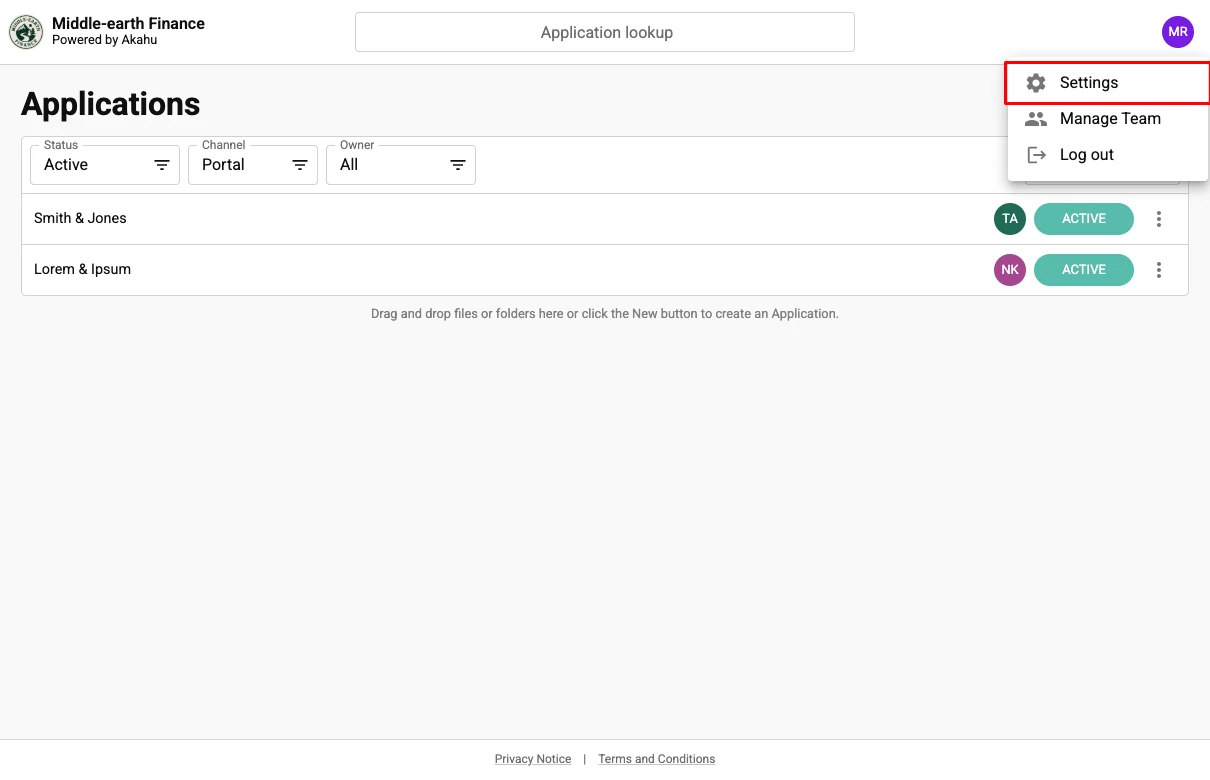
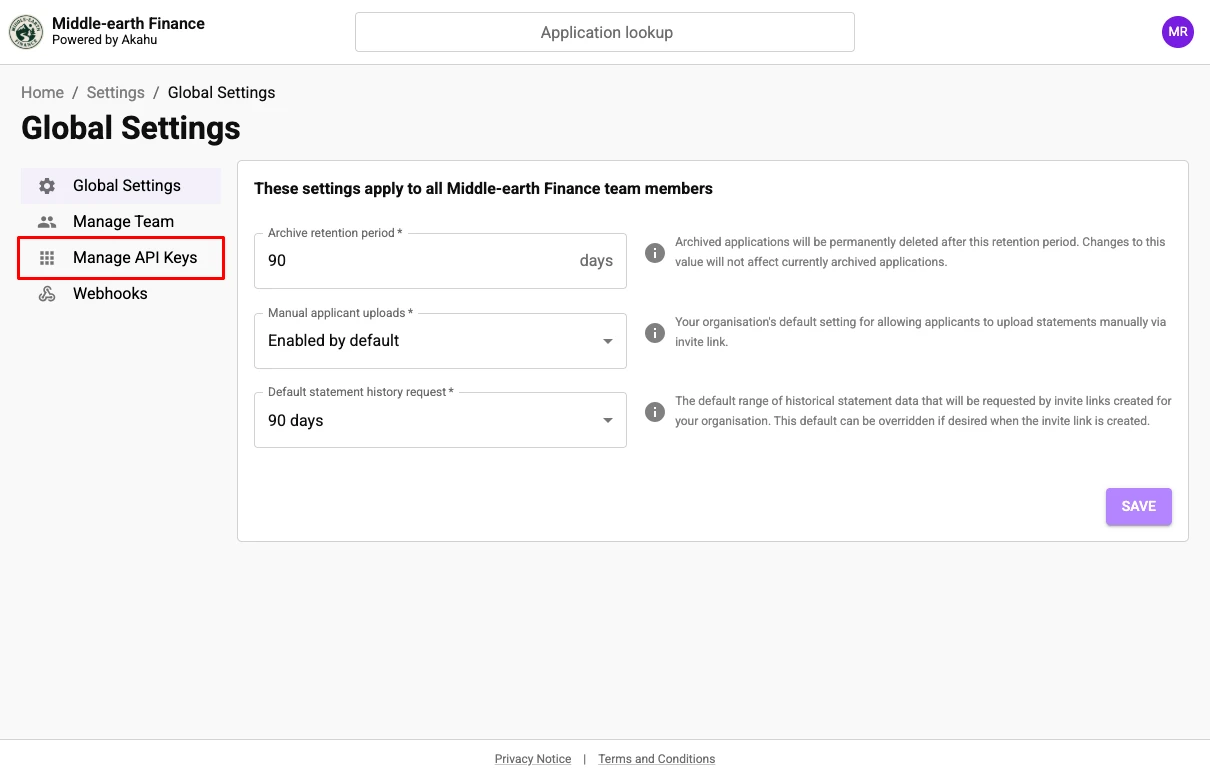
- Log in to Akahu Apply as a user with the “admin” role and navigate to Settings > Manage API keys.
 |  |
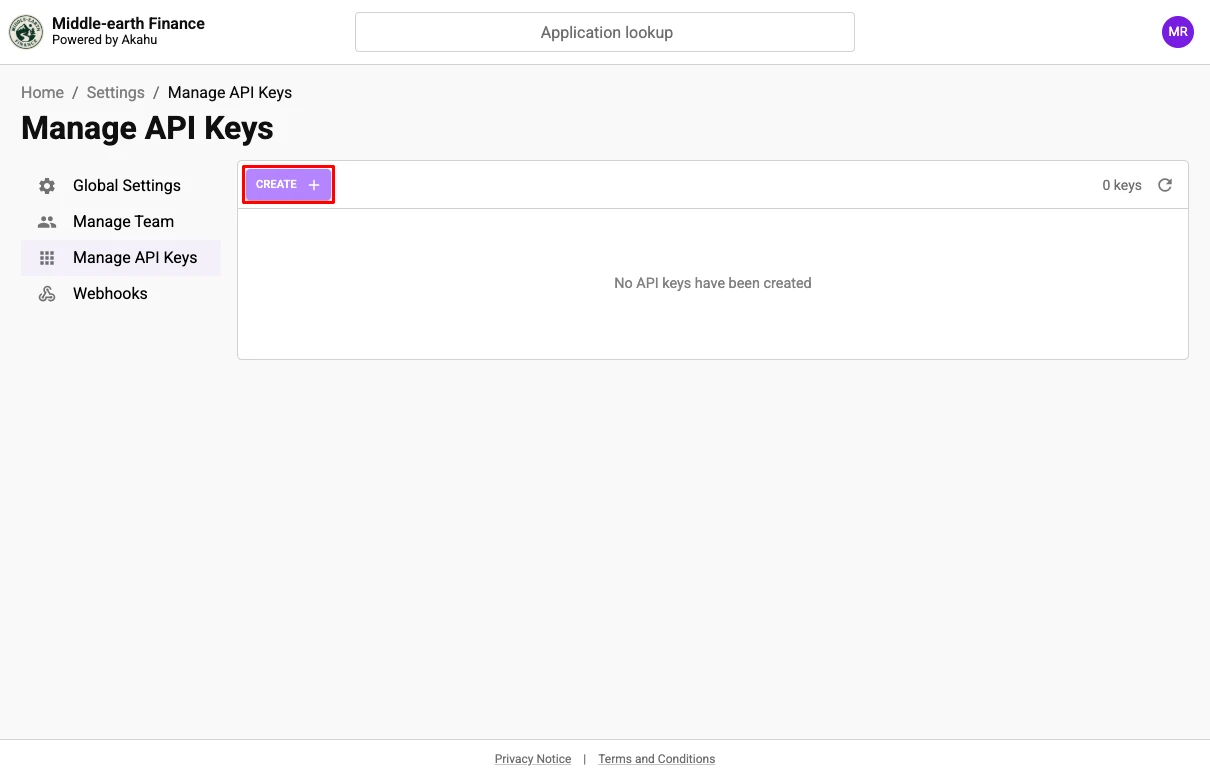
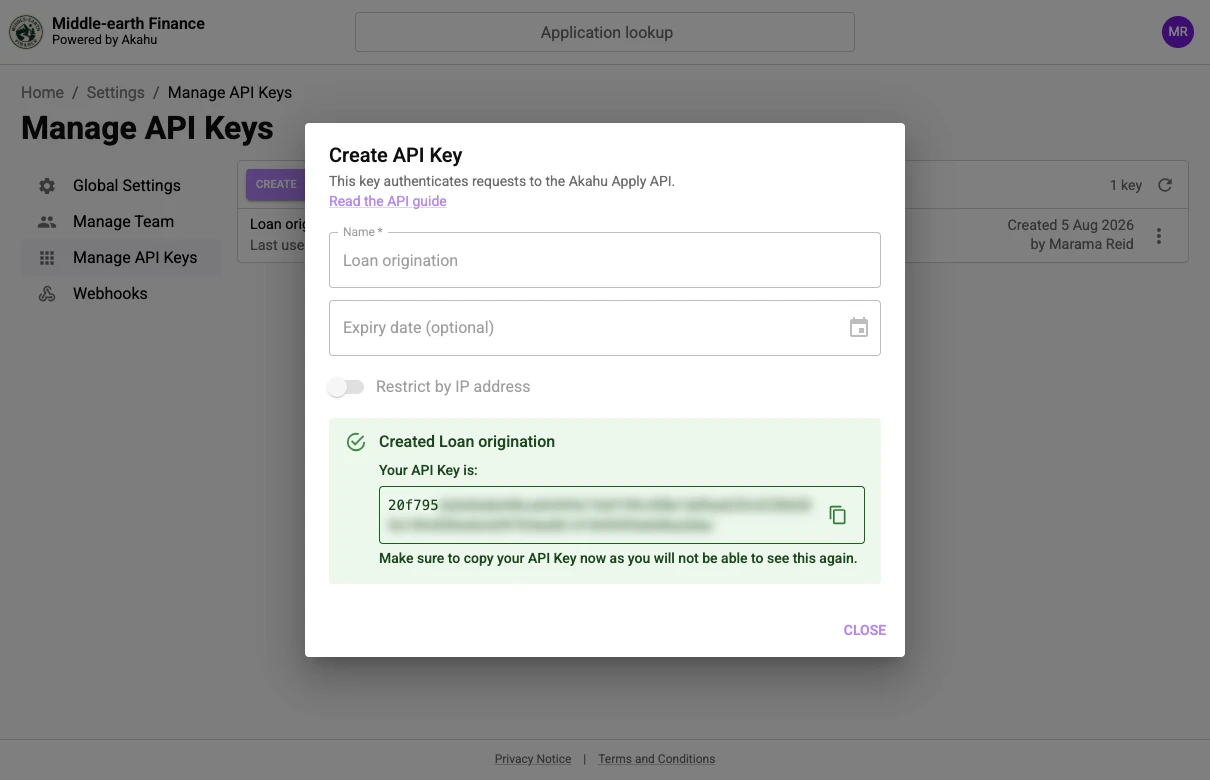
- Click “Create” and choose a name and expiry (optional) for your API key. You can also restrict the key by IP address.
 | 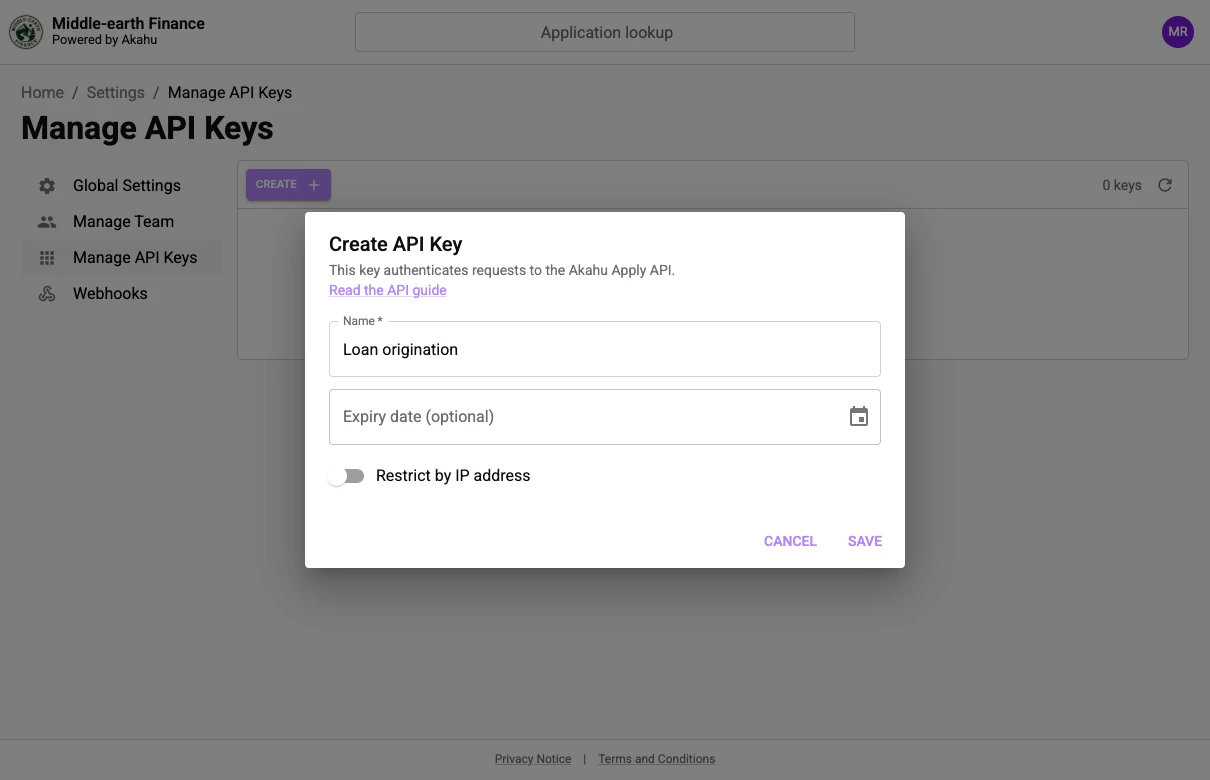 |
- Click save to create the API key. Make sure that you copy the key somewhere secure, as you won’t be able to access it again after closing the form.
Warning!This API key provides access to data belonging to your organisation and its customers. Take care to store your API key securely.
 | 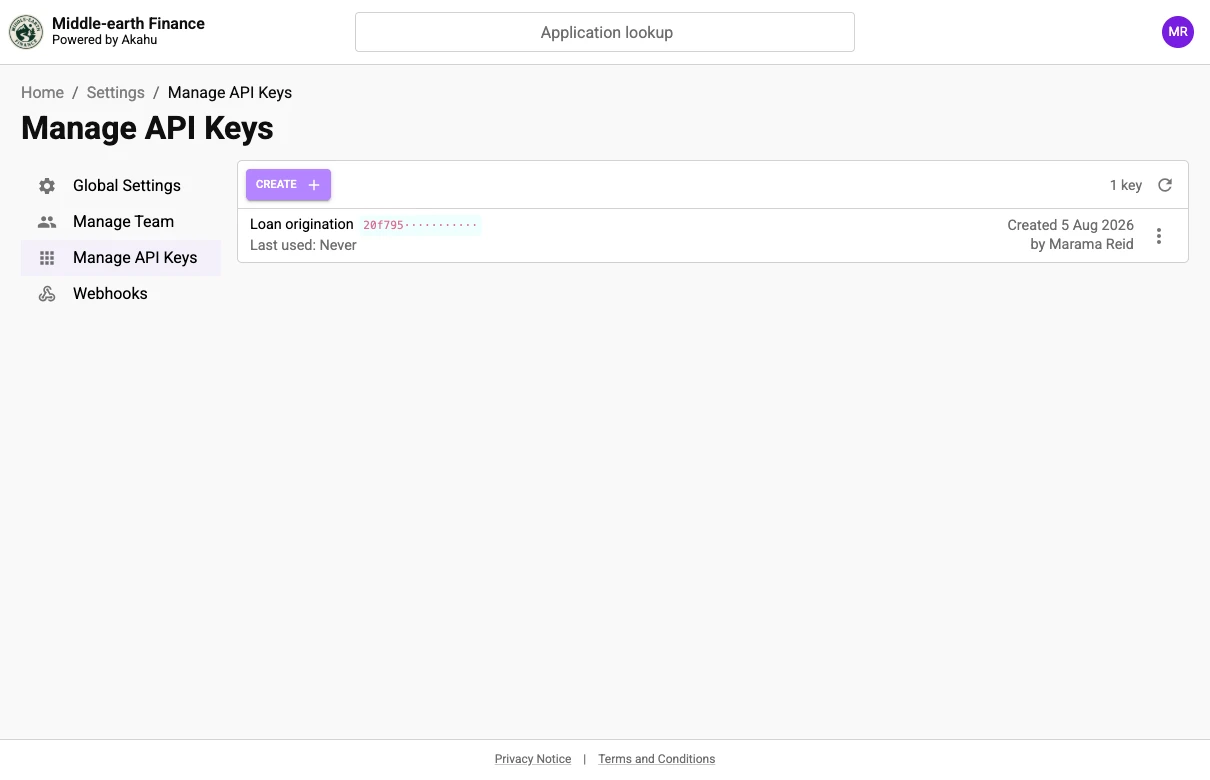 |
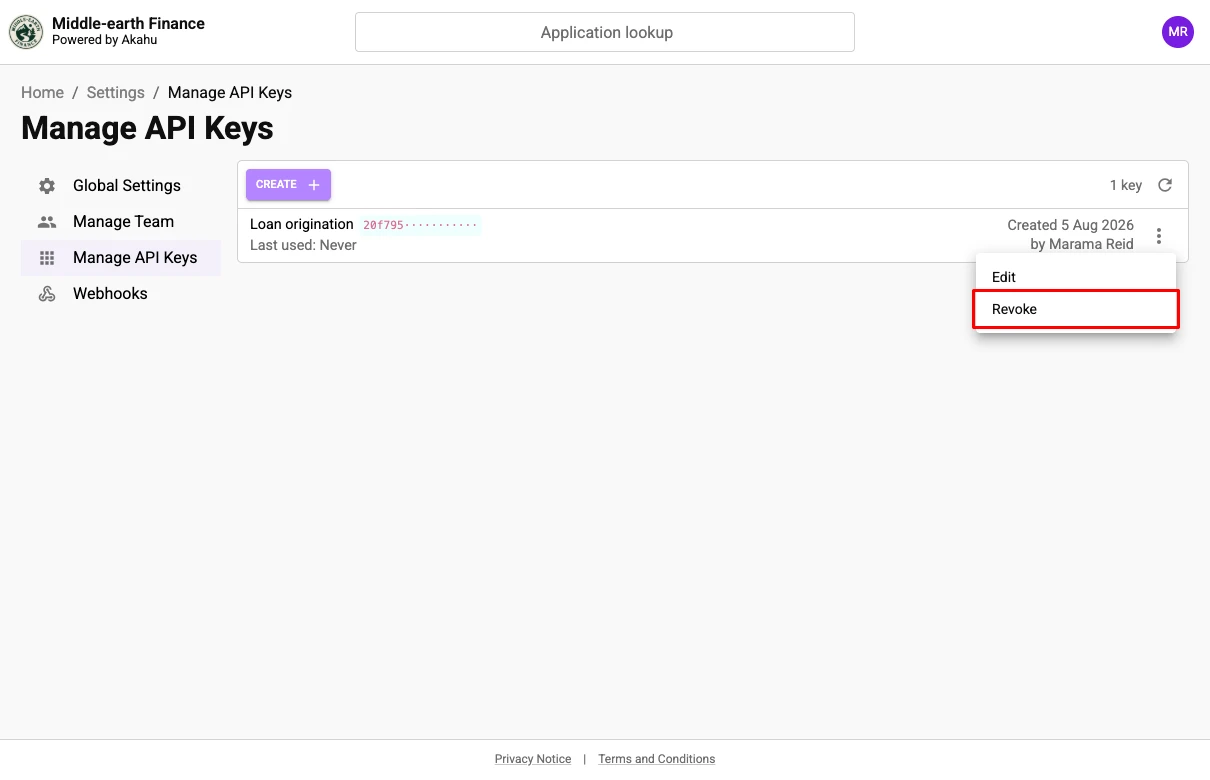
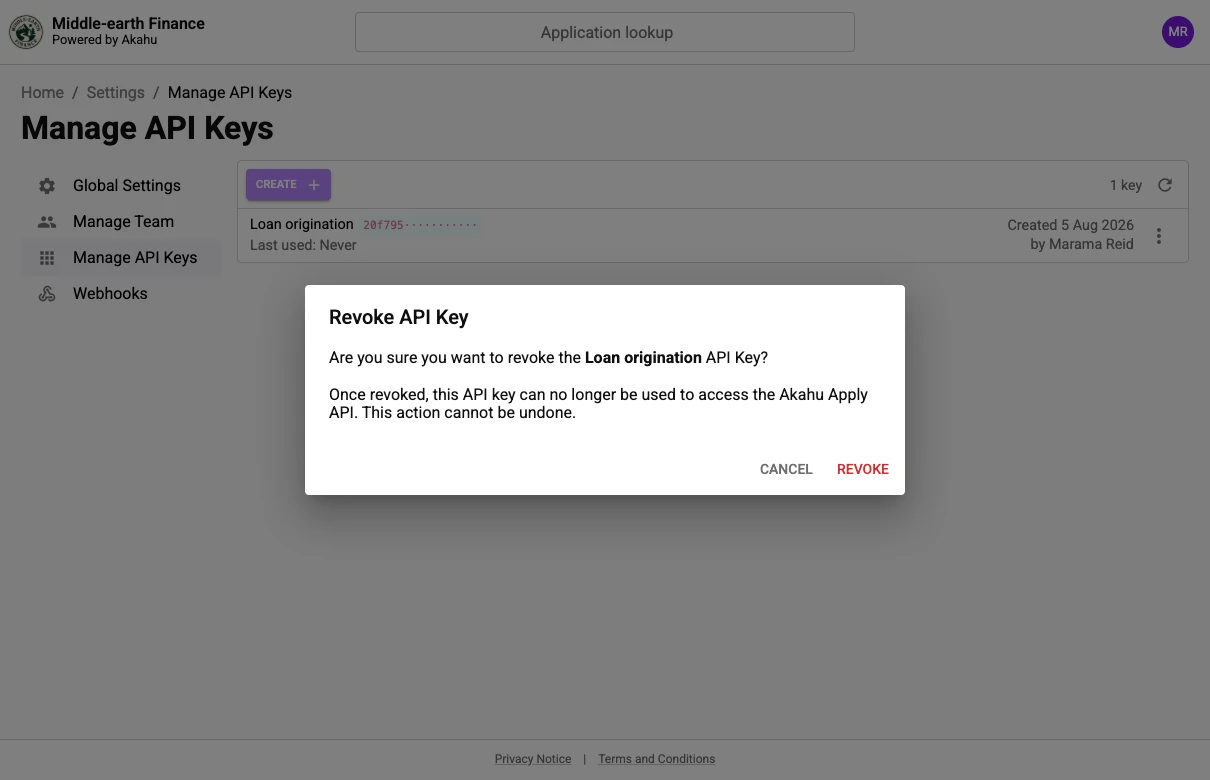
- API keys can be viewed and revoked by all users in your org with the “admin” role.
 |  |
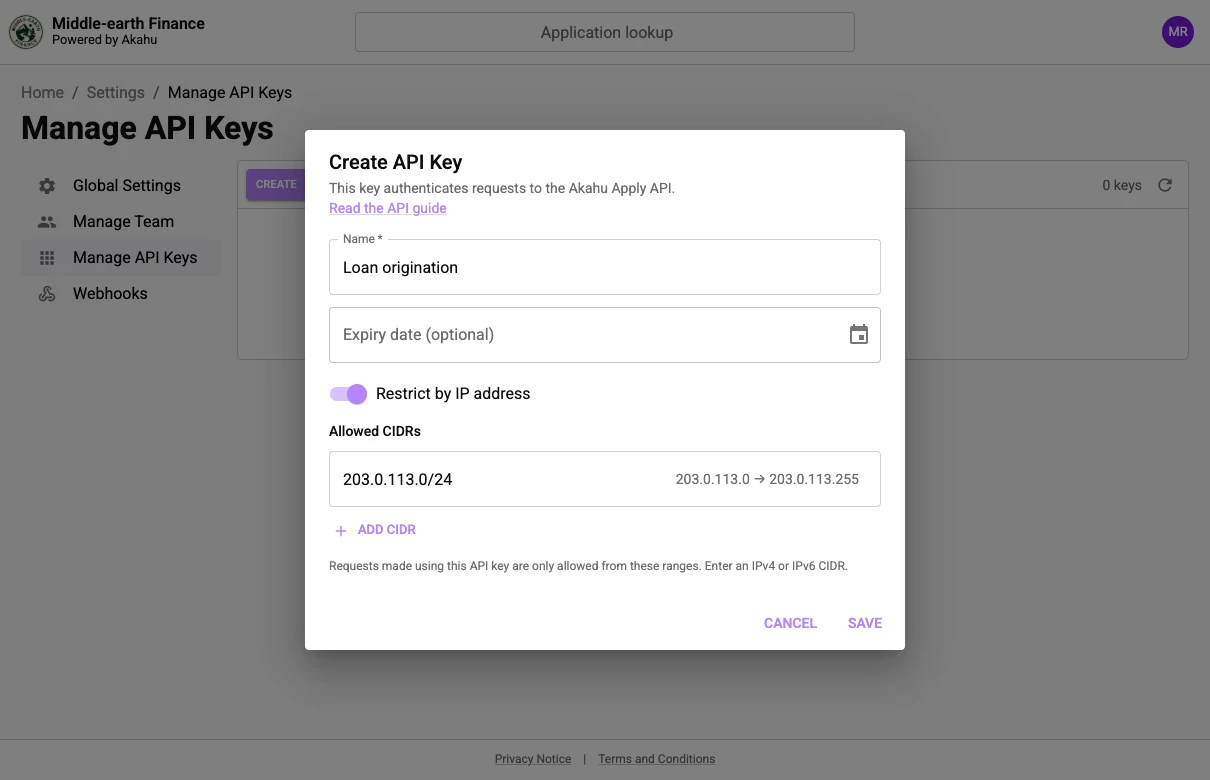
Restricting an API key by IP address
An API key can be restricted to a set of IP ranges. Requests made with that key from any other address are rejected.
Turn on the “Restrict by IP address” switch in the Create API Key dialog to set this up when you create a key. To change the ranges later, edit the key from its menu on the Manage API Keys page.
Ranges are entered as CIDR, either IPv4 or IPv6. A bare address is accepted and stored as a host route. As you type, the dialog shows the first and last address that each range resolves to.
At least one range is required while the switch is on. Use “Add CIDR” to add more.
 |
Making a request
To verify that your API key is working, you can send a test request, replacing {API_KEY} with your new API key:
curl https://api.apply.akahu.nz/v1/orgs/current \
  --header 'Authorization: Bearer {API_KEY}`
The response should include some basic information about your organisation:
{
  "_id": "org_s5l7kht0o1oknb0fl15i31rg",
  "name": "Middle-earth Finance",
  "logo": "https://public-assets.apply.akahu.nz/org_s5l7kht0o1oknb0fl15i31rg/logo"
}
Next steps
Congratulations, you’re ready to start using the Akahu Apply API.
Read on to get familiar with the Key Concepts you need to know about when working with Akahu Apply.
You can also find detailed API schema information in our API Reference and download our OpenAPI schema here.
You can also set up Webhooks to receive events as your applications, documents, and reports change.
Updated 29 days ago